Understanding Neonatal Jaundice
Neonatal jaundice is a common condition in newborns. It causes a yellow tint to the skin and eyes. Usually, this happens within the first week of life. For many babies, jaundice is mild and goes away on its own. However, some babies need treatment. Phototherapy for neonatal jaundice is a safe and effective option. Parents often worry, but knowing the facts can help you feel more confident.
Symptoms of Neonatal Jaundice
It is important to spot the signs early. Common symptoms include:
If you notice these symptoms, contact your doctor right away. Early care can prevent problems.
Causes of Neonatal Jaundice
Jaundice in newborns happens when there is too much bilirubin in the blood. Bilirubin is a yellow substance made when red blood cells break down. Newborns have more red blood cells than adults. Also, their livers are still growing, so they cannot clear bilirubin quickly. Sometimes, other factors can increase the risk, such as:
Because of these reasons, many babies develop jaundice in the first days of life.
How Is Neonatal Jaundice Diagnosed?
Doctors use several methods to check for jaundice. First, they look at the baby’s skin and eyes. Next, they may use a special light meter on the skin. If needed, a blood test measures the bilirubin level. This helps decide if treatment is needed. Early diagnosis is key for safe care.
What Is Phototherapy for Neonatal Jaundice?
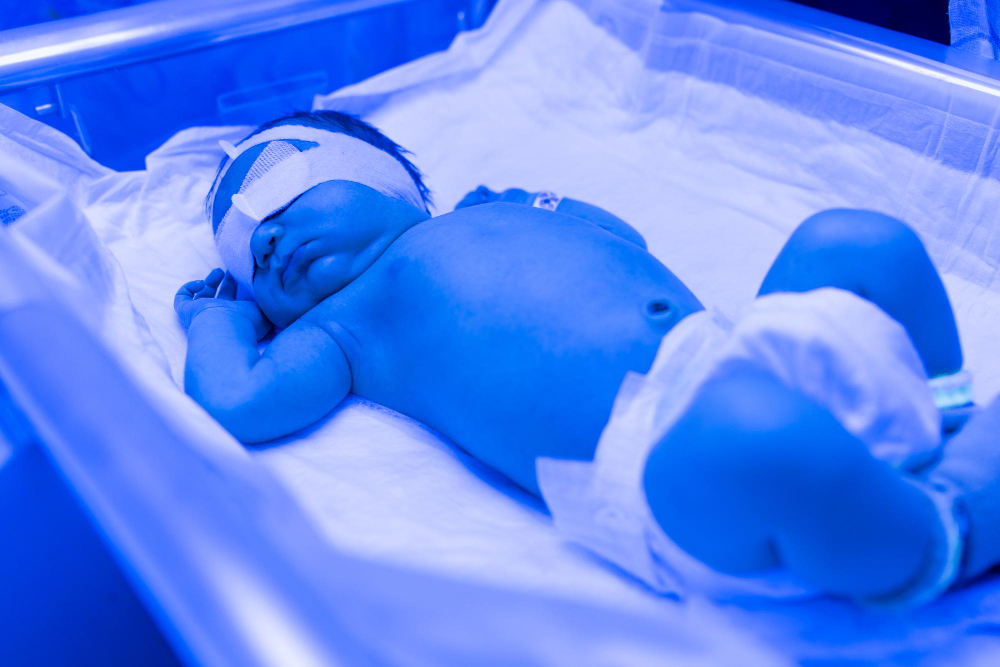
Phototherapy is the most common treatment for newborn jaundice. It uses special blue lights to help break down bilirubin in the baby’s skin. As a result, the body can remove bilirubin more easily. Phototherapy for neonatal jaundice is safe and widely used in hospitals and clinics in the US and worldwide.
How Does Phototherapy Work?
During phototherapy, your baby lies under bright blue lights. The baby wears only a diaper and protective eye covers. The light changes bilirubin into a form that the baby’s body can remove through urine and stool. Usually, the treatment lasts one to two days. However, the exact time depends on how high the bilirubin level is.
When Is Phototherapy Recommended?
Doctors recommend phototherapy when bilirubin levels are too high or rising quickly. Sometimes, babies with risk factors need treatment sooner. For example, premature babies or those with blood type issues may start phototherapy earlier. Your doctor will check bilirubin levels and decide the best time to begin.
The Phototherapy Procedure: What to Expect
Knowing what happens during phototherapy can ease your worries. Here is what you can expect:
Most babies respond well and need only a short stay in the hospital.
Is Phototherapy Safe for Babies?
Phototherapy for neonatal jaundice is very safe. According to the American Academy of Pediatrics and the World Health Organization, it is the standard treatment for high bilirubin. The lights do not cause pain. Nurses and doctors watch your baby closely to prevent any problems. Most side effects are mild and easy to manage.
Possible Side Effects and Their Management
Although phototherapy is safe, some babies may have mild side effects. These can include:
To manage these, nurses check your baby’s skin and hydration often. They may give extra fluids if needed. Usually, side effects go away after treatment ends.
Tips for Parents During Phototherapy
While your baby is getting phototherapy, you can help in several ways:
Remember, your support helps your baby recover faster.
Prevention and When to Seek Medical Help
Although not all cases can be prevented, you can lower the risk by:
If you notice your baby is very sleepy, not feeding well, or the yellow color is spreading, seek medical help right away. Early care can prevent serious problems.
Conclusion
In summary, phototherapy for neonatal jaundice is a safe and effective treatment. Most babies recover quickly with proper care. If you have concerns about jaundice or its treatment, consult a pediatrician for personalized advice on neonatal jaundice and its treatment.